Running City2Surf Barefoot: 14km With No Shoes
There are two types of people at the City2Surf:
- People in high-tech running shoes chasing a PB
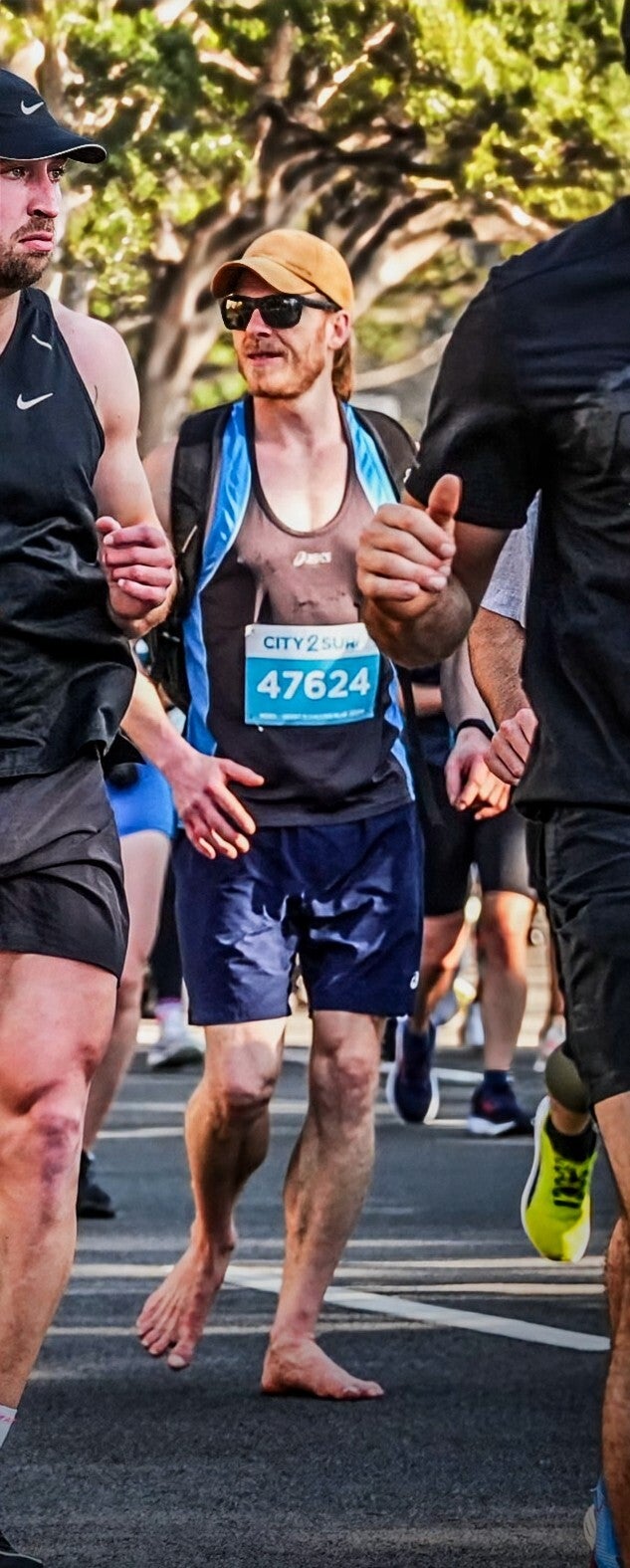
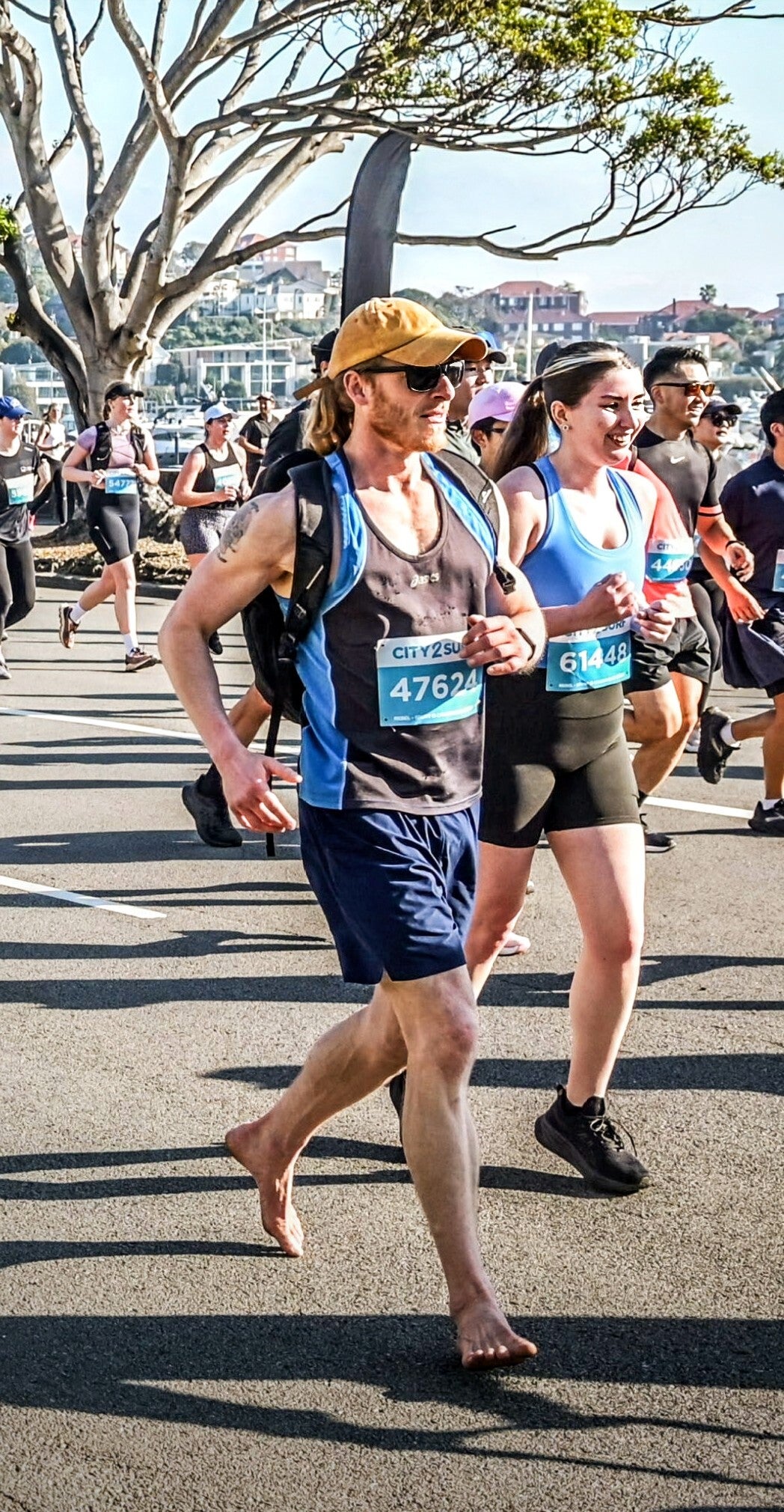
- Me… out there barefoot like I took a wrong turn on the way to the beach
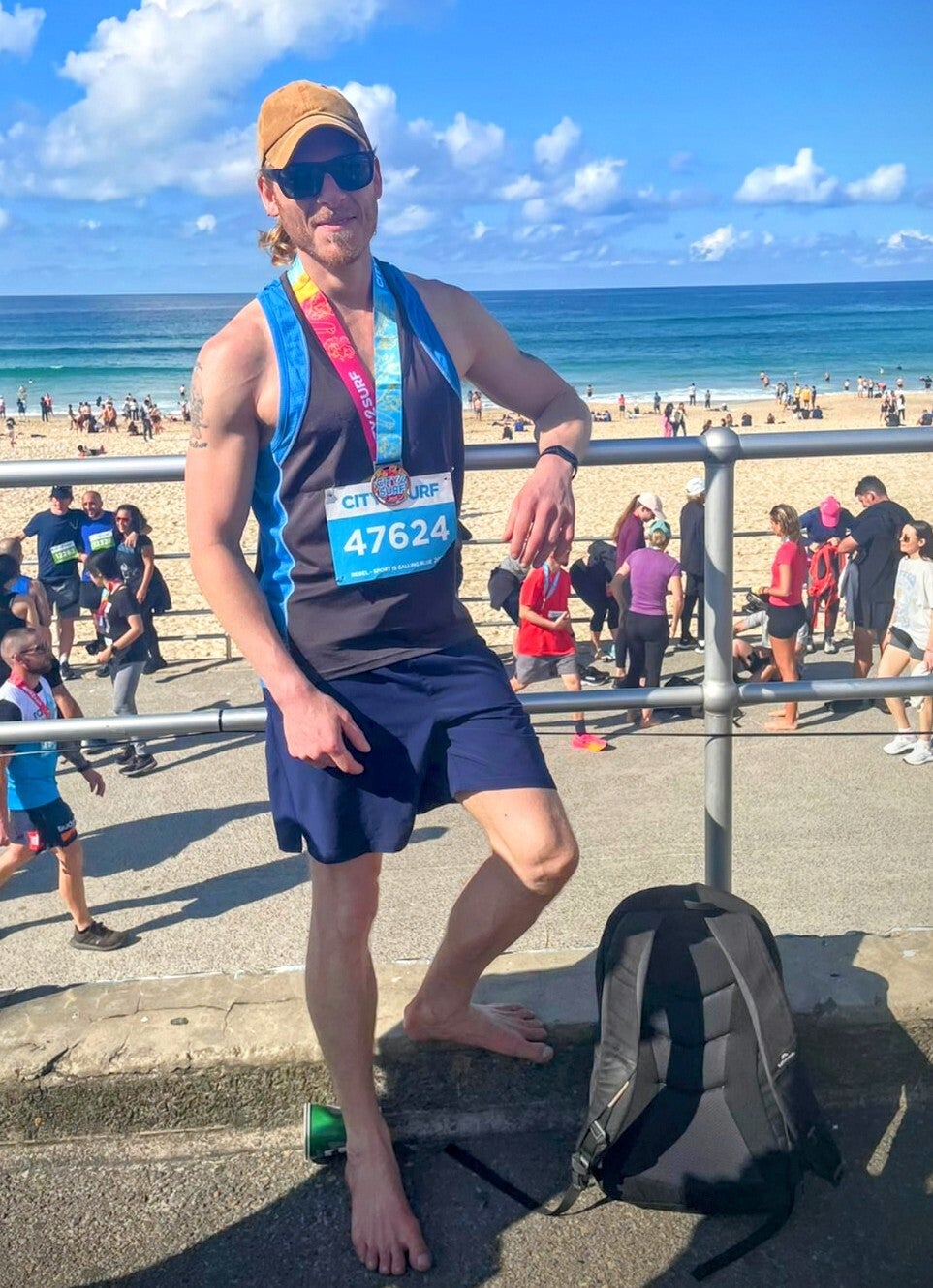
Yep — 14km, completely barefoot, through one of the biggest running events in Sydney.
No cushioning.
No support.
Just me, the road, and a lot of people questioning my life choices.
Finished in 1 hour 36 minutes
Why Would Anyone Run Barefoot? (Fair Question)
I get it — on paper, barefoot running sounds like a terrible idea.
But here’s the thing: barefoot running is actually the most natural way humans were designed to run. Long before modern running shoes, we moved across all kinds of terrain using efficient, low-impact mechanics.
Modern shoes?
They often do the opposite.
They can:
- Encourage heavy heel striking
- Reduce foot strength
- Mask poor running technique
- Increase risk of injury over time
Barefoot running flips that completely. It forces your body to:
- Move lighter and more efficiently
- Land with better mechanics
- Rebuild foot strength and stability
- Improve overall running form and posture
What It Actually Feels Like Running 14km Barefoot
I won’t lie — the first few kilometres, your brain is very aware of what you’re doing.
“Is this smart?”
“Why is everyone staring at my feet?”
“Was this a terrible decision?”
But then something shifts.
You stop fighting it… and you start flowing.
You feel the ground.
You adjust naturally.
Your stride shortens.
Your body relaxes.
Barefoot running turns the race into something else entirely:
👉 Less brute force
👉 More awareness
👉 Way more connection to your body
What Barefoot Running Teaches You (Very Quickly)
Running City2Surf barefoot reinforced everything I teach in my barefoot and minimalist running coaching:
1. Your Body Knows What It’s Doing
Take away the shoes, and your body naturally finds better mechanics:
- Shorter stride
- Softer landing
- Better posture
No overthinking required.
2. You Can’t Fake Good Technique
Shoes let you get away with bad habits.
Barefoot? Not a chance.
If your form is off, you feel it immediately — and your body corrects fast. That’s how you build efficient, injury-resistant running technique.
3. Strong Feet Change Everything
Your feet are supposed to:
- Absorb impact
- Stabilise movement
- Adapt to terrain
Barefoot running rebuilds:
- Foot strength
- Ankle stability
- Lower limb resilience
This is huge if you’ve dealt with chronic pain, injuries, or recurring tightness (like I used to).
4. It’s a Mental Game Too
Running barefoot in a crowded race sharpens your focus.
You’re constantly:
- Scanning the ground
- Adjusting your stride
- Staying present
It builds mental resilience, awareness, and calm under pressure — the same skills that carry into life, training, and recovery.
From Pain to Running Free
Before I transitioned to barefoot running, I dealt with:
- Chronic back pain
- Poor running mechanics
- Post-run tightness and fatigue
Now?
I can run 14km barefoot, pain-free, through one of the most demanding fun runs out there.
That didn’t happen by accident.
It came from learning how to move properly, rebuilding strength, and progressing the right way.
Thinking About Trying Barefoot or Minimalist Running?
Before you throw your shoes in the bin and sprint down the street — slow down 😄
Barefoot running is powerful, but it needs to be done correctly and progressively.
That’s where most people go wrong.
I help clients with:
- Safe transition to barefoot or minimalist running
- Running technique and gait correction
- Foot strength and mobility training
- Injury prevention and recovery strategies
Whether you’re a beginner or an experienced runner, the goal is simple:
👉 Run stronger
👉 Move better
👉 Stay injury-free